
Building the Future with IoT Smart Building Solutions
Traditional building management systems often result in high maintenance costs, inefficient operations, and unnecessary energy consumption. Smart buildings, on the other hand, uses advanced technologies to connect, collect, and analyze data to automatically and remotely control building operations. In smart buildings, IoT solutions, including sensors, controllers, and gateways, enable real-time monitoring and automation to improve efficiency, comfort, and safety. Milesight delivers comprehensive wireless IoT solutions for smart buildings, enabling real-time people sensing, optimized resource allocation, and efficient facility management, unlocking new levels of building intelligence.
How to Empower Smart Buildings through the Power of IoT Innovations
The smart building market is rapidly expanding, driven by automation and IoT technologies. To maximize value, smart buildings are increasingly designed around human experiences, making people-centric innovation and people-sensing solutions essential.
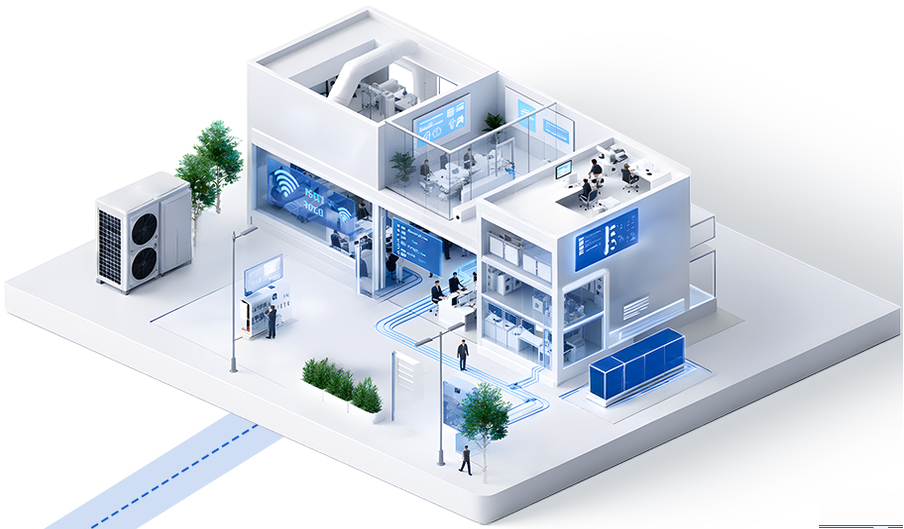
Integrated Facility Management, for Seamless Building Operations and Asset Protection
Facility management integrates protection, efficient operations, and smart upgrades into buildings. IoT Facility Management solutions monitor building assets such as HVAC systems, electrical circuits, meters, and water supply to enhance asset safety and lifespan while reducing manual inspections and improving efficiency. These solutions also optimize equipment and space utilization for better control and higher operational efficiency.
- HVAC System Performance Monitoring
- Circuit Operational Status Monitoring
- Facility Protection
- Unified Lighting Control
- Centralized HVAC Control
- Remote Meter Reading
- Water Supply Control
- Restroom Cleaning Schedule Management
- Restroom Supplies Management
- Facility Utilization Management
Intelligent Energy Management for Sustainable and Profitable Buildings
IoT-enabled building energy management solution enables intelligence to HVAC, lighting, and power systems. Precise energy monitoring and remote control prevent energy spikes, reduce peak consumption, and cut unnecessary waste, leading to effective energy-saving strategies.
- HVAC Automation Adjustment
- Real-Time Local HVAC Interaction
- Data-Driven HVAC Operation Strategy Optimization
- Smart Lighting Control
- Real-Time Local Energy Interaction
- Data Driven Energy Strategy Optimization
Smart Space Management for Enhanced Building Efficiency and Well-being
IoT-powered space management turns real-time occupancy and environmental data into smarter decisions. It maximizes space utilization, improves comfort and safety, and supports sustainability goals, driving higher productivity, better occupant experience, and stronger ROI.
- Restroom Air Quality Management
- Noise Monitoring
- Temperature and Humidity Control
- E-cigarette/Cigarette Detection
- Space Optimization
- Footfall Monitoring
- Sanitation Management
- User Satisfaction Management
- Employee Scheduling
- IAQ Monitoring
- Sustainability
- Fire Safety
- Safety & Healthy Monitoring
- Safety Alarm
People Sensing: Driving Smart Building and Beyond Applications and Value
People Sensing can effectively provide data related to people and integrate with the three main application areas of smart building management: safety and security management, energy management, and building infrastructure management. By combining different solutions, it enhances the operational efficiency and value of buildings. Additionally, the application of People Sensing technology extends to retail, public utilities, and elderly care and medical sectors, unlocking the higher potential and value of IoT.
Wireless Integrating with Building Management System
Wireless Sensors for Building Management Systems
By utilizing advanced LoRa® technology, data from various sensors and devices can be collected and transmitted without the need for extensive wiring. This wireless approach not only simplifies installation and reduces infrastructure costs, but also ensures flexible, scalable connectivity across your entire facility. As a result, you gain comprehensive, real-time visibility and control over building operations—empowering smarter, more efficient management.
Seamless Integration with Building Management System
With support for industry-standard protocols such as BACnet and Modbus, Our wireless building management system solution enables real-time data to be seamlessly integrated into your existing Building Management System (BMS).

Profitable Smart Building With Milesight FES Plus Solutions
Ranked as a top IoT innovator in smart building sensors for 2025, Milesight delivers advanced solutions for intelligent buildings. Access our full range of materials or consult directly with our IoT experts to transform your building with cutting-edge technology.
Comprehensive IoT Building Solutions:
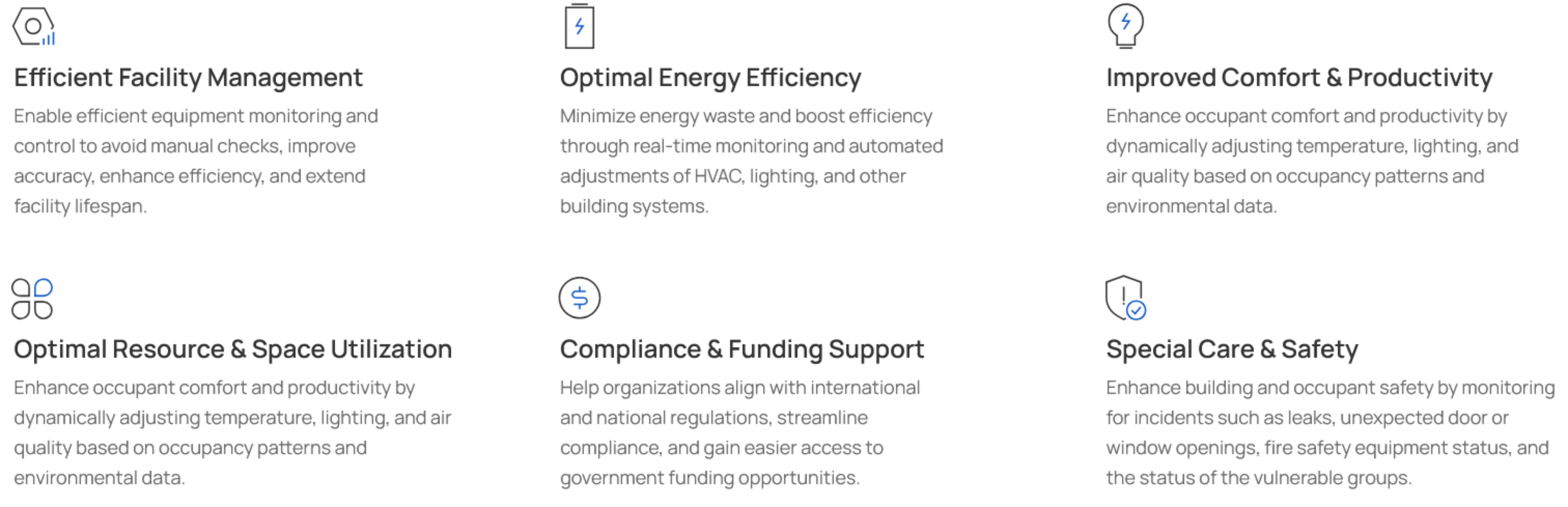
Maximizing Efficiency, Comfort, and Value
Success Stories in People Sensing Driven Building


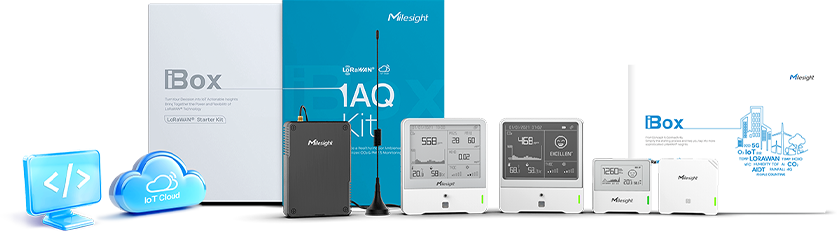
Quick Start The Differentiated Smart Building with the iBox Kit
Quickly launch building applications with the iBox kit. This all-in-one solution covers building, office, restroom, and air quality applications, offering an unparalleled experience.
Wireless Vertical Solutions for Specialized Building Applications
- People Counting
- Space Occupancy
- Indoor Air Quality Monitoring
- HVAC Management
- Water Management
- Smart Office
- Smart Restroom
Frequently Asked Questions
The current state of IoT smart buildings involves the integration of connected devices and systems that enhance building management and occupant experience. To further advance their development, Milesight can leverage IoT devices from nodes to connectivity to achieve high-quality intelligent processes. Additionally, Milesight's rapidly developing people sensing product series can make the intelligent outcomes of smart buildings more human-centric and better meet actual needs, thereby enhancing the feasibility and value presentation of projects.
Occupancy sensors detect the presence and number of people in a space, providing real-time data that enables intelligent control of various building systems. For example, when occupancy levels rise, ventilation can be increased to maintain optimal air quality, while HVAC systems automatically adjust heating and cooling to ensure comfort and energy efficiency. In addition, lighting can be switched off in unoccupied areas, further reducing energy consumption. By linking occupancy data to air quality management, HVAC control, and lighting automation, buildings can operate more efficiently, lower operational costs, and create healthier, more comfortable environments for occupants.
Modern smart buildings rely on a variety of IoT sensors to monitor and optimize their environments. Key types include: IAQ Sensor (Indoor Air Quality Sensor): Measures levels of pollutants, CO₂, VOCs, and particulate matter to ensure healthy air quality and support ventilation control. Thermostat: Monitors and regulates temperature settings, enabling automated climate control for occupant comfort and energy savings. People Counter: Tracks the number of individuals entering or leaving a space, supporting occupancy analytics and crowd management. Occupancy Sensor: Detects the presence or absence of people in an area, enabling automated control of lighting, HVAC, and other systems based on real-time usage. Temperature & Humidity Sensor: Continuously monitors ambient temperature and humidity, helping to maintain comfortable and safe indoor conditions. Current Transformer: Measures electrical current in power lines, facilitating energy monitoring, load management, and predictive maintenance. Distance/Level Sensor: Detects distances or measures levels of liquids and solids (e.g., water tanks, waste bins), supporting resource management and leak prevention. Leakage Sensor: Identifies water leaks early to prevent property damage and ensure safety. IoT Controller: Acts as a central hub to collect data from sensors and execute automated commands for building systems. Together, these IoT devices enable smart buildings to optimize energy use, enhance comfort, improve safety, and streamline operations.